

Choosing the right software can make financial management better, cut down on errors, and boost efficiency. Automated reconciliation software makes financial work easier by automating the reconciliation process. It’s key for businesses because it makes financial data management more accurate and efficient. Automated reconciliation software changes how finance teams work with financial records. On Statement of Comprehensive Income average, 3MM – 4MM intercompany invoices are created in GE’s Internal Billing System (IBS) annually.
The 15-minute month-end close
Traditional intercompany reconciliation processes face several challenges that can hinder efficiency and accuracy. One of the main challenges is the reliance on manual data entry and paper-based documentation. The process is cumbersome and time-consuming, which increases the risk of errors. For example, consider a multinational corporation that operates in over 30 countries with dozens of subsidiaries. Each unit intercompany reconciliation performs transactions with the others, leading to a complex mesh of intercompany dealings. By implementing a centralized financial system, the corporation can automate the reconciliation process, ensuring that all transactions are recorded consistently and discrepancies are flagged immediately.
Take the Complexity Out of Payments and FX
Blockchain provides a collaborative framework for sharing trusted data and exchanging digital assets. Oracle offers easy ways to adopt blockchain technology, including Oracle-managed and customer-managed cloud services, on-premises, and multicloud editions. The future of intercompany accounting is one of convergence between regulatory compliance, technological innovation, and strategic financial management. Companies that embrace these trends will not only streamline their operations but also gain a competitive edge through enhanced financial insights and decision-making capabilities. For example, a multinational corporation might have an entity in the US that provides management services to its subsidiary in Germany.
Challenges and considerations
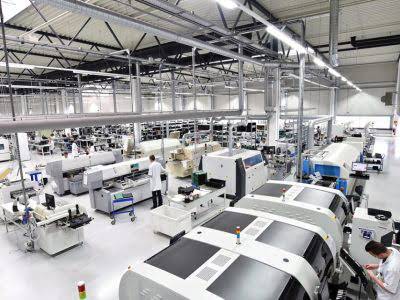
To illustrate, consider a multinational corporation with subsidiaries A and B. Subsidiary A manufactures components and sells them to Subsidiary B, which assembles the final product. Likewise, a parent business cannot record the transactions with one of its units as a profit or a loss.
- Accountable roles and shared governance accelerate adoption, compliance, and ROI.
- These networks encompass various entities within a corporation that engage in transactions with each other, spanning different jurisdictions, currencies, and regulatory environments.
- This would create an immutable record that all parties can trust, reducing the need for extensive reconciliation processes.
- It will be more automated, accurate, and give deeper insights into money matters.
Market challenges
The IT landscape is centrally set up and all entities use the same ERP system, single source of truth. The individual entities are linked to the IT business unit with the central ERP system. Without IT Governance, there is a risk that each entity will create its own access to the central ERP system, which can lead to insecure accesses. Within the entities, they ensure that the entities have met the access standards before granting them access to the central data center https://www.bookstime.com/ where the ERP system is located. The IT Business unit is responsible for the entire ERP IT configuration, they organize this with an internal IT-controls framework.
Services
IBS is used to manage intercompany transactions globally and facilitates the settlement of those transactions internally. The system, now over 25 years old, operates on legacy mainframe technology and with rising capital requirements to operate the platform, a replacement is required. The organization of IT governance, IT strategy, and IT-business alignment is controlled at the entity level.

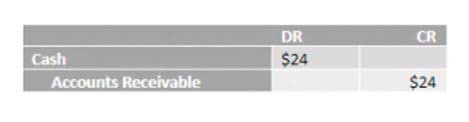
Leveraging technology to streamline intercompany transactions not only improves accuracy and efficiency but also provides strategic insights that can lead to better decision-making. As companies continue to grow and evolve, the adoption of these technological solutions becomes not just beneficial but essential for maintaining competitive edge and financial integrity. Intercompany transactions are a vital aspect of modern corporate finance, requiring meticulous attention to detail and rigorous reconciliation processes. By understanding the various facets of these transactions, companies can better navigate the challenges they present and leverage them for strategic advantage. For example, if a subsidiary purchases supplies from another, it will record a $1,000 transaction in its purchase account.
Big data analytics played a pivotal role for a financial institution looking to optimize its transaction process. By analyzing patterns and trends in historical transaction data, the institution could predict peak times and allocate resources accordingly, thus improving processing speed and customer satisfaction. For example, a multinational corporation operating in both the EU and Asia must align its billing systems to accommodate the EU’s VAT system as well as the GST prevalent in many Asian countries. This requires a sophisticated billing platform capable of handling different tax rates, exemptions, and reporting requirements.
The company might use a combination of forward contracts to secure favorable exchange rates for its major transactions and options to protect against adverse movements for less predictable cash flows. Additionally, it might hold a strategic reserve of currencies that are expected to strengthen against its home currency, thus gaining on the exchange rate differentials. We’ve implemented this transformation for global enterprises across manufacturing, healthcare, retail, and financial services. Our approach is proven, and our technology is already processing over $1 billion in transactions annually.